Northfields man and van tips for tight staircases
Posted on 30/06/2026
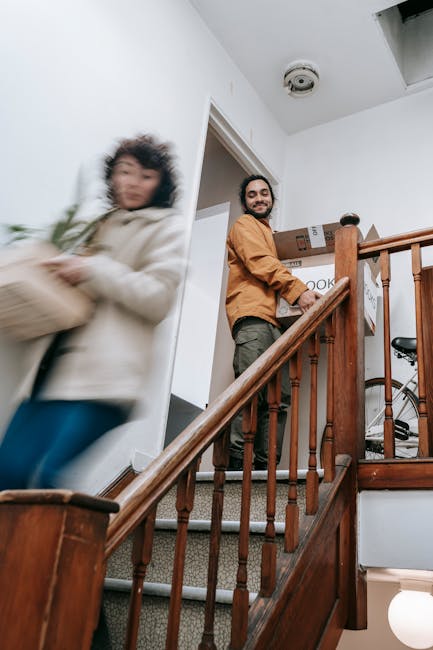
Northfields man and van tips for tight staircases: a practical guide for awkward Ealing moves
If you are moving in Northfields and the staircase looks like it was designed by someone who had never seen a sofa, you are not imagining it. Tight landings, narrow turns, low ceilings, and awkward handrails can turn a simple man and van job into a slow, stressful shuffle. The good news is that Northfields man and van tips for tight staircases are mostly about planning well, measuring properly, and choosing the right order of work. Get those bits right and the move feels calmer, safer, and a lot more manageable.
This guide walks through the practical side of moving bulky items up or down cramped stairs in Northfields. You will find step-by-step advice, common mistakes, a useful checklist, and a realistic comparison of moving methods. It is written for real people with real furniture, not showroom-perfect rooms.
Why Northfields man and van tips for tight staircases Matters
Tight staircases are not just a nuisance. They shape the whole move. A wardrobe that would glide through a hallway can suddenly snag on a bend, a chest of drawers can twist awkwardly against the wall, and one careless lift can leave marks on plaster, skirting boards, or the item itself. In old Ealing terraces and split-level flats, that happens more often than people expect.
There is also the human side. When the stairs are narrow, everyone slows down. The mover leading the item cannot always see the feet of the person behind them, and the person behind cannot always see the landing edge. It only takes one rushed step and the whole rhythm is off. To be fair, a lot of moving stress comes from that exact moment when people realise the sofa is not going to turn on its own.
That is why Northfields-specific planning matters. Northfields homes often include compact stairwells, basement access, maisonettes, and converted flats where access is more of a puzzle than a path. If you already know this, you can prepare better, reduce damage, and avoid last-minute panic. If you do not, the staircase tends to teach you the hard way.
Key takeaway: the more constrained the staircase, the more the move depends on measurement, timing, and communication rather than brute strength.
How Northfields man and van tips for tight staircases Works
The basic idea is simple: break the job down before the furniture ever reaches the stairs. A good man and van arrangement for narrow access usually starts with a quick access check, then a loading plan, then a route for each item. You are not just moving boxes. You are plotting the path.
In practice, that means identifying the widest point, the tightest turn, and anything that could catch: light fittings, banisters, radiators, door handles, picture ledges, and wall corners. Then each item gets assessed on its own. A bed frame may come apart easily. A dining table might need its legs removed. A heavy bookcase may be better carried on its side, but only if the item and the staircase allow it.
Good movers also think in terms of angles. Sometimes an item will not fit straight, but it will fit when tilted, rotated, or lifted upright between two people. That is why this kind of move is less about "how strong are we?" and more about "what angle gets us through safely?" Small difference, big outcome.
If you are comparing services or trying to understand the wider process, the company's services overview can help you see how man and van support fits alongside other removal options. For broader local moving help, the guide to removals in Ealing is also useful background reading.
Key Benefits and Practical Advantages
When you handle narrow stairs properly, the benefits go well beyond saving a few minutes. You protect belongings, reduce strain, and make the entire day feel more controlled. That matters a lot when you are already juggling keys, parking, neighbours, and the inevitable missing box of chargers.
- Less damage: careful routing and lifting reduce the chance of scuffed walls, chipped frames, and crushed corners.
- Faster load-in and load-out: items that are measured and prepared in advance move much more efficiently.
- Lower physical strain: proper handling is easier on backs, shoulders, and knees. Nobody wants to discover their heroics later that evening.
- Better coordination: a clear plan reduces shouting up and down the stairs. That alone is worth something.
- More confidence on moving day: when everyone knows the route, the job feels far less chaotic.
There is another advantage people miss: better decision-making. Once you know an awkward staircase is in play, you can choose whether to dismantle furniture, send items separately, book extra help, or place some belongings into storage first. If you need that option, storage in Ealing can be a practical pressure release rather than forcing everything through in one go.
And yes, sometimes the best move is not the obvious one. A little furniture disassembly beats a scratched banister every time.
Who This Is For and When It Makes Sense
This advice is especially useful if you live in a Northfields flat, a maisonette, a converted period property, or a house with tight internal stairs. It is also relevant if you are helping a student move, collecting second-hand furniture, or shifting a few bulky household items between nearby addresses.
You will get the most value from these tips if:
- your staircase has a tight turn at the landing
- the stairwell is narrow enough that two people cannot pass comfortably
- you have large furniture such as sofas, wardrobes, beds, or cabinets
- you are moving during a busy weekday and need the job done efficiently
- you are trying to avoid damage in a rented property or shared building
It also makes sense to use a man and van service when the move is local, time-sensitive, or too small for a full removals crew. If you are working to a budget, or only shifting a few key items, that middle-ground approach is often the sweet spot. For local support, you can look at man and van Ealing or the broader man with a van Ealing service depending on what you need moved.
If the move is bigger than it first looks, or includes several heavy items, a proper furniture-focused service may be the safer choice. In that case, furniture removals Ealing is the kind of page worth checking before you commit.
Step-by-Step Guidance
The best way to handle tight stairs is to make the move boring in advance. Boring is good here. Boring means measured, predictable, and not full of surprises.
- Measure the access properly. Check stair width, ceiling height, landing space, and the tightest point on the turn. If possible, measure the furniture too, including any protruding handles or legs.
- Identify awkward items early. Sofas, mattresses, wardrobes, desks, and pianos often need special handling. A piano, obviously, is its own world. If that is part of your move, specialist help matters, and piano removals Ealing is the safer route to consider.
- Disassemble what you can. Remove table legs, shelves, mirrors, loose doors, and bed slats. Keep screws and fittings in labelled bags. Not glamorous, but very effective.
- Protect the route. Use blankets, corner guards, or simple padding on obvious contact points. A few minutes of protection saves a lot of repairs.
- Plan the carry. Decide who leads, who steadies, and when to pause. Use clear commands like "stop", "tilt", "lift", and "down". Short words work best on stairs.
- Move the easiest items first. This opens the route and gives everyone a rhythm. Boxes, lamps, and smaller items should not be wedged behind the awkward wardrobe.
- Take the large items one at a time. Resist the urge to stack too much into one trip. That is how people lose control and start laughing nervously halfway up the stairs. Been there, seen it.
- Check the building rules and neighbours. In shared buildings, warn people if you are using communal stairs or need a short holding area. A little courtesy goes a long way.
A useful local read at this stage is the Ealing Broadway removals guide for flats and houses, especially if your move overlaps with apartment access, shared entrances, or busy streets.
Expert Tips for Better Results
Here is where the small details really start paying off. The biggest gains on tricky staircases usually come from a handful of calm, practical adjustments.
- Use the staircase before the staircase uses you. Walk the route empty first. Notice where you naturally slow down or twist your shoulder. That tells you where the risk points are.
- Think vertically and diagonally. If an item will not fit flat, it may fit upright or on a diagonal. This is especially true for mattresses and some chair frames.
- Put the most awkward item on its own journey. One difficult item deserves a clean route. Do not trap it behind five easy boxes.
- Keep hands off the corners. Hold furniture where the structure is strongest, not on decorative edges or loose panels.
- Use timing to your advantage. If the building is quieter early in the morning or midweek, the move can feel less pressured. Fewer people on the stairs means fewer interruptions.
- Protect the last turn. The landing bend is often the real challenge, not the main staircase. This is where furniture catches, so slow right down there.
One small but helpful habit: keep a roll of tape, a marker, and a sharp knife in the same pocket or bag. You will look very organised for about ten glorious minutes, which is more than enough.
If you are deciding between service levels, the article on removal services Ealing is worth a look because it helps place man and van work in the wider moving picture.
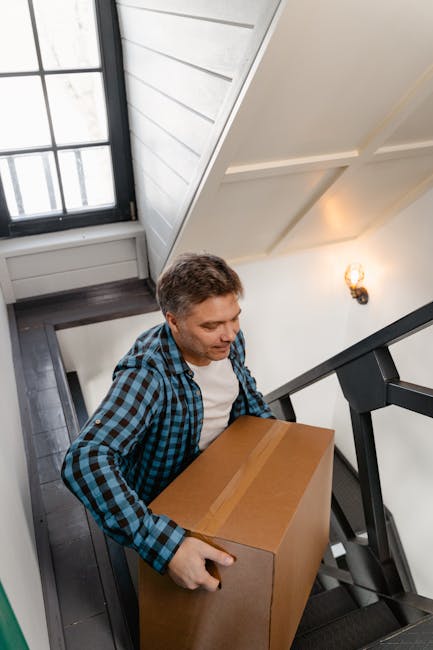
Common Mistakes to Avoid
Most staircase problems are caused by a handful of repeated mistakes. You can avoid nearly all of them with a bit of patience.
- Not measuring properly. Eyeballing the staircase is a gamble. A tape measure is much cheaper than repairing a damaged wall.
- Leaving furniture assembled when it should not be. A wardrobe that stays intact can become a staircase problem very quickly.
- Forgetting about the landing. Many people measure the stairs and ignore the turn. That is a classic error.
- Using too few people. Some items need two steady hands and a third person guiding the base. More control, less wobble.
- Rushing the final lift. The last few steps are not the moment to speed up. They are the moment to breathe.
- Blocking the route with boxes. It sounds obvious, but it happens all the time. The stuff you loaded first should not be the stuff you are climbing over later.
The other mistake is emotional, really: assuming the move should be easy because it is "only a few items." Staircases do not care how optimistic you are.
Tools, Resources and Recommendations
You do not need a van full of specialist kit, but the right basics make a big difference. For most Northfields moves, the most useful items are practical, not fancy.
| Tool or item | Why it helps | Best used for |
|---|---|---|
| Moving blankets | Protects furniture and walls from scuffs | Sofas, wardrobes, tables, banisters |
| Furniture straps | Improves grip and load control | Heavy or awkward items |
| Gloves with grip | Helps prevent slips and finger strain | Boxes, frames, and slippery surfaces |
| Padding or corner guards | Reduces damage on sharp corners | Landings, wall edges, door frames |
| Labels and marker pen | Keeps dismantled parts organised | Flat-pack items and furniture hardware |
For the planning stage, a simple room-by-room inventory is often enough. Write down the bulky items, note which ones come apart, and sort them into "easy", "medium", and "awkward". That little three-part split is surprisingly useful.
If you are still in the packing stage, packing and boxes Ealing can help you think through the materials side of the move as well. And if you want broader background on what the team covers, removal companies Ealing is a sensible next stop.
Law, Compliance, Standards, or Best Practice
For a domestic move, most of the practical responsibility sits with common-sense safety and good handling rather than complicated regulation. That said, best practice still matters. Anyone helping with lifting should avoid putting themselves or others at risk, and items should be moved in a way that does not create hazards in communal spaces, stairwells, or entrances.
If a property is rented or shared, you may also need to respect building rules, landlord instructions, or leasehold requirements about access, noise, or parking. In London, this can become relevant very quickly, especially when a van needs to load close to the entrance. It is worth checking rather than assuming.
Insurance is another sensible consideration. If you are moving valuable furniture through tight stairs, ask what cover is in place and how damage is handled. That is not being awkward; it is being sensible. The pages on insurance and safety and health and safety policy are useful for understanding how a professional service approaches the issue.
Where waste, packaging, or unwanted furniture is involved, it also helps to think about disposal responsibly. A move is often a good moment to reduce clutter, and the page on recycling and sustainability is relevant if you are trying to keep the process tidy and waste-conscious.
Options, Methods, or Comparison Table
There is no single right way to handle a staircase-heavy move. The best choice depends on the size of the load, the layout of the building, and how much time and help you have.
| Approach | Best for | Pros | Limitations |
|---|---|---|---|
| DIY with friends | Small moves, light furniture | Flexible, low cost, simple to organise | Higher risk of strain and mistakes on stairs |
| Man and van | Local moves, mixed-sized loads | Practical, efficient, usually cost-effective | May still require careful dismantling and planning |
| Specialist removals | Heavy, fragile, or awkward items | More support, more experience with access issues | Can be more expensive for small jobs |
| Split move with storage | Staged moves or temporary access problems | Reduces pressure on moving day | Requires extra coordination |
For many Northfields households, the man and van route is the best balance. It is nimble enough for local roads and tight schedules, but flexible enough to support awkward access if the plan is right. If time is tight, the local same day removals Ealing option may also be relevant, though you should only use that if the access issue is clearly manageable and the load is realistic.
Student moves and flat moves are often the most staircase-sensitive, so if your situation sounds like either of those, the pages on student removals Ealing and flat removals Ealing are both worth keeping in mind.
Case Study or Real-World Example
Picture a typical Northfields move: a one-bedroom flat, a narrow internal staircase, and a sofa that looked perfectly reasonable in the living room but suddenly seems enormous in the hallway. The resident has packed everything into neat boxes, but the sofa is the problem. The landing is tight, the turn is sharp, and there is a framed print on the wall that absolutely should not be grazed.
In this sort of case, the move works best when it is slowed down before it starts. The sofa cushions come off first. The legs are removed if possible. The route is checked from top to bottom, and two people test the angle before the item is fully committed to the stairs. A third person stands by to guide the back corner. The whole thing takes longer than expected, yes, but it avoids damage and everyone keeps their patience.
The neat part is that once the first awkward item succeeds, the rest of the move feels easier. Boxes follow more easily. The stairs stop feeling like an enemy. It is still a move, so it is never perfectly relaxing, but it becomes manageable. That is usually the real win.
If you are moving into or out of a local house rather than a flat, the broader house removals Ealing service may fit better, especially where more furniture and more access points are involved.
Practical Checklist
Use this checklist the day before, or even the morning of the move if that is all you have. It keeps the job focused.
- Measure the stair width, landing, and the largest furniture items.
- Confirm which items need dismantling.
- Label screws, bolts, and small fittings.
- Clear the hallway, landing, and stair route.
- Protect walls, corners, and fragile edges.
- Check parking and access arrangements for the van.
- Tell neighbours or building management if needed.
- Separate fragile items from heavy loads.
- Keep water, tape, a marker, and gloves close to hand.
- Leave the hardest item for the calmest moment, not the last frantic one.
And one more thing: if a job starts to feel unsafe, stop. There is no prize for forcing a sofa through a staircase that clearly disagrees with the plan.
Get a free quote today and see how much you can save.
Conclusion
Northfields staircases can be tricky, but tricky does not have to mean stressful. With accurate measurements, a sensible carry plan, and the right level of help, even awkward access can be handled smoothly. The main thing is to respect the staircase for what it is: a constraint that needs planning, not a challenge to be rushed through.
If you remember only one idea from this guide, make it this: prepare the route before you prepare the lift. That simple shift saves time, protects belongings, and keeps everyone a bit calmer. Truth be told, that is what a good move should feel like.
For more about the team behind the service, you can read about us or explore the wider removals Ealing information as you plan your next step. And if you are sorting dates, access, or anything slightly fiddly, it is better to ask early than to improvise on the landing at 8:15 in the morning.
Some moves are neat, some are noisy, and some involve a bit of awkward sideways turning. That is life. But with the right approach, it all gets done - and done well.